2 weeks in Hong Kong, between dim sum and a thesis manuscript
It has already been 2 weeks since I arrived in Hong Kong for a 2-month research visit at The Hong Kong Polytechnic University (PolyU). Time flies indeed, as my days have filled up with work, meals and exploration. The weather has been generous so far, ranging from warm and sunny to pleasantly cool, with only a few days of passing rain.
The city is one of surprises and of staggering scale, where the old, spiritual and busy Cantonese life rubs against the cyberpunk skyline of bank towers rising above the harbour. Here, a simple walk like the one I took last Sunday in search of a pull-up bar can turn into an afternoon on a nearby island, watching the sunset and talking about life with someone I had just met over lunch in a crowded dim sum restaurant.
That is a reasonably good introduction to my first 2 weeks in Hong Kong, the so-called vertical city that never sleeps, with its extraordinary density of people and skyscrapers. There has been plenty of work, including a rather large share devoted to my PhD thesis manuscript, but the city keeps handing me reasons to close my laptop and go out. Sometimes those reasons are mountains or a boat trip. Quite often, they are food.
I wanted to set these beginnings down while the small surprises are still fresh, from the quest for a working phone connection to the discovery that a few hesitant words of Mandarin Chinese usually earn me a reply in flawless English.
Getting here, and getting connected
The journey began aboard Air China, from Paris to Hong Kong by way of Beijing. I had unearthed a ticket for less than €400 and braced myself to go hungry, so the 3 meals served along the way came as a welcome relief, and set a promising culinary course for the whole trip. The airline’s app and the online check-in tested my patience, and the onboard Wi-Fi refused to cooperate, but both flights went remarkably smoothly.
For those planning to travel to Hong Kong, I can definitely recommend the Air China route. When you create your account, however, make sure to enter your full name exactly as it appears on your passport, rather than only your first and last names. Otherwise, you will be unable to check in online. If you find yourself in that situation, you can still check in at the airport as I did, and call or email the airline’s support to have your account corrected, which took a few days in my case.
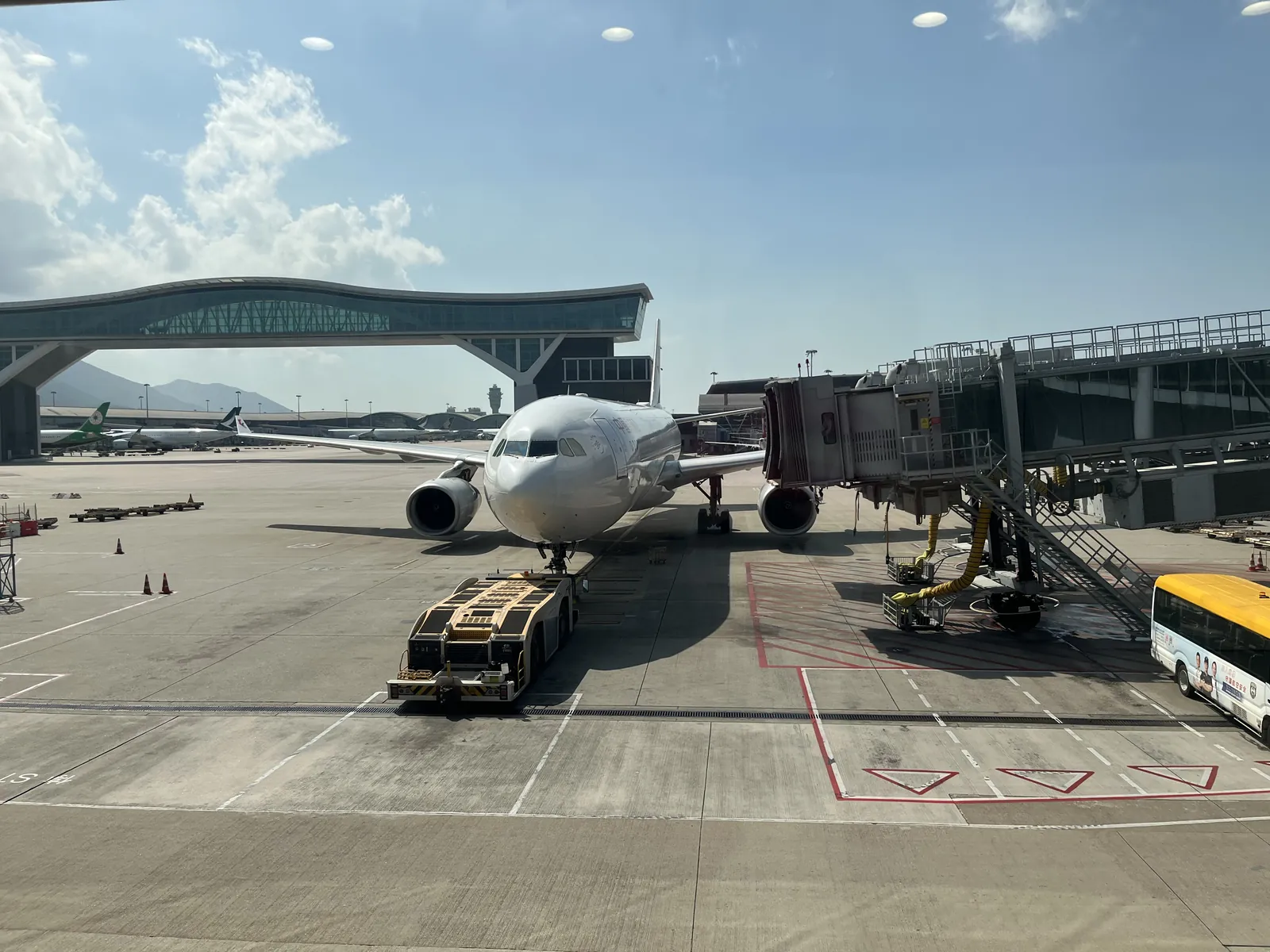
The journey also brought the first encounters. Gloria and Iris, whom I met on the plane, steered me through the connection in Beijing, and Gloria gave me my very first Cantonese lesson. Before I had even set foot in Hong Kong, I was hoarding greetings, polite expressions, numbers, and the question that asks for a price. Summoning them while someone waits for an answer is another matter.
I had arranged a SoSIM eSIM for Hong Kong before leaving, registration included, so that getting connected would not be my first chore after landing. I was glad to have completed the installation and the account verification in advance, since the process was not entirely straightforward. The eSIM worked well, and I could use it right after landing, once I had restarted the phone. For the later day trip to Macau, I used an eSIM bought through Trip.com, following a piece of advice from a fellow traveller from the Netherlands. It was good intel, as the eSIM was super convenient and took only a few minutes to install. These are humble practicalities, yet stepping into an unfamiliar city with maps and messages at hand takes much of the edge off the arrival.
Another faithful companion is the Octopus card, which pays for transport and small purchases alike, and which I feed at 7-Eleven. I bought one at the airport on arrival, and it has been a great help in getting around. Once phone and transport were tamed, the remaining errands turned out much more mundane than the skyline might suggest, since I only needed to make a few small purchases.
Packing light, and settling in
The flight ticket was very cheap because it did not include checked luggage, so I had only about 5 kg of hand luggage with me, most of which was electronics. Indeed, as an experienced traveller who is used to the great outdoors, I took the bare minimum of clothing and toiletries. Here is the precise list of what I brought with me:
- My work laptop and its accessories, which take up most of the weight.
- 4 pairs of socks and underwear, which makes 5 with the pair I was wearing on the plane. I hand-wash them in small batches every 2 days, so that a clean pair is always ready for each day, with 1 extra pair to spare just in case.
- 1 sports T-shirt and 1 pair of sports shorts for exercise. They are very light and dry quickly, so I can wash them in the evening and have them ready for the next day.
- 1 spare fast-drying shirt and casual shorts for everyday wear. Shorts are much lighter than full-length trousers. On the plane, I wore a long-sleeved shirt and long trousers.
- A toothbrush, toothpaste and 1 bar of soap, the bare minimum for hygiene.
- Bandages, cold medicine, painkillers, and medicine for stomach issues prescribed by my excellent doctor in Lyon, France.
- A tick removal tool. I always carry one, since it is super light and can be a lifesaver in case of a tick bite. As I plan to go hiking, I prefer having it with me.
- Earplugs. They make life so much easier, the flight included.
Upon arrival in the city, here is what I bought right away to get settled:
- 2 small fast-drying towels. Having 2 small ones rather than 1 large one is better, since one can dry while I use the other.
- 1 bottle of shampoo, much better for everyday use than a bar of soap. I use the bar of soap for washing my clothes.
- 2 bottles of water of 2 L each, which I refill at the office. I avoid drinking tap water, based on what I have read online, and I have had no issues so far.
- Mosquito repellent, quite useful when hiking around, especially in the countryside or on the islands.
- A pack of peanuts as emergency food, always great to have around.
- A razor, shaving cream, a small bottle of aftershave and some deodorant.
- A power bank. I did not have a flight-sized one, so I bought one quickly, and I definitely recommend having one at all times.
- A sleeping mask and a pair of flip-flops. Like the power bank, I regretted not having packed them from the start, since the mask would have made the flight easier, and the flip-flops are very useful for the shower and for walking around the apartment.
- Adapter plugs for Hong Kong, bought at the same shop, so that I can charge my phone and laptop at the same time.
Hong Kong has shopping centres and small shops everywhere, so I had no trouble finding the few things I needed at a fair price.
Finding my bearings in Hung Hom
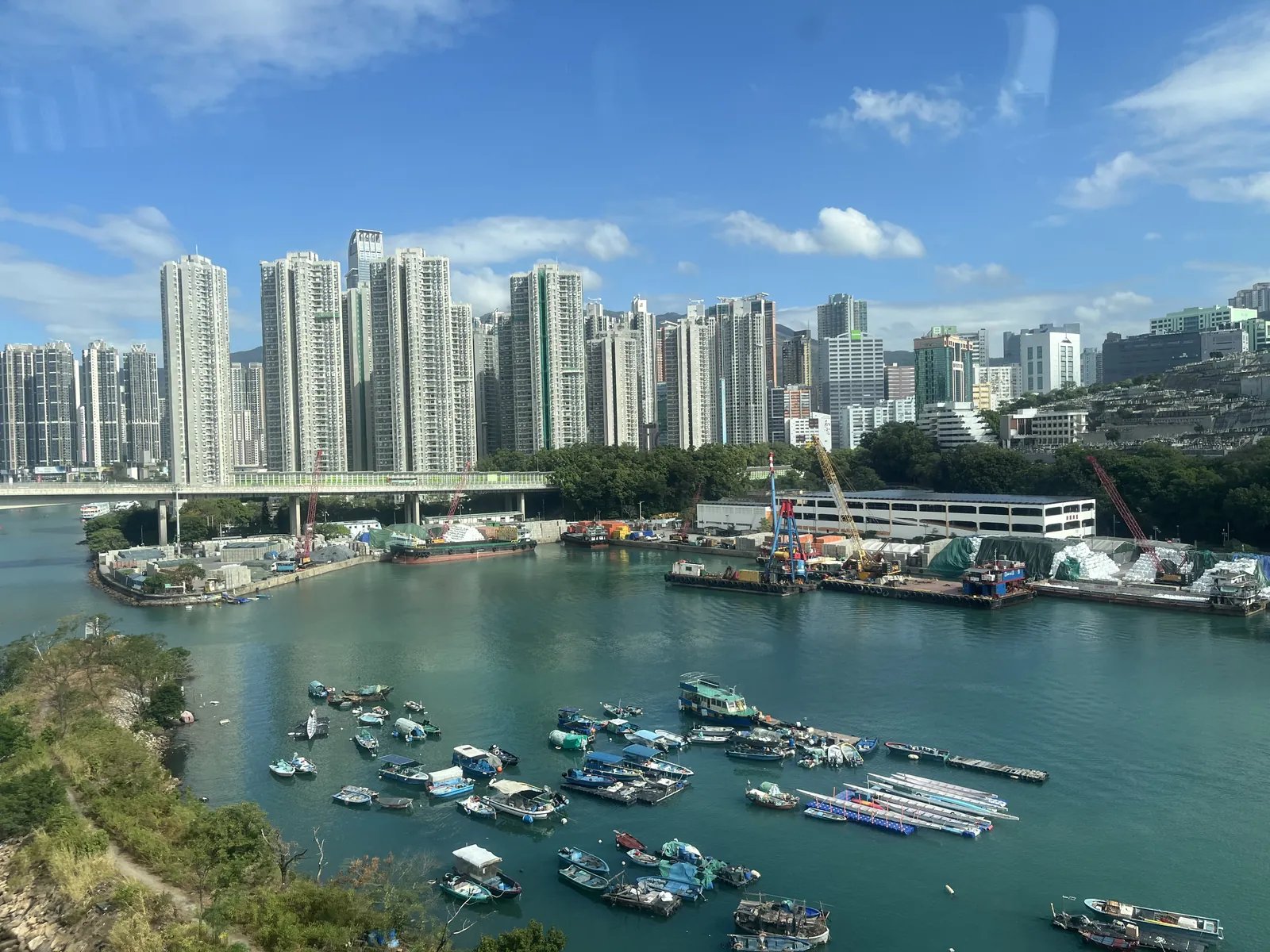
My first impressions were overwhelming, in the good sense of the word. The air was warm and wet, people and vehicles flowed past without pause, and the buildings loomed enormous, so tightly packed that I could not even find the sunset between them. I wrote to friends that Hong Kong made Paris feel like the countryside, which probably says more about my state of amazement than about Paris.
Jet lag blurred everything a little further. During the first days, I would lie wide awake all night and then feel my brain running in slow motion at the office. I was delighted and exhausted in equal measure. Fortunately, finding something good to eat demanded very little effort.
I live in Hung Hom, not far from PolyU, in a Cantonese neighbourhood I have quickly grown fond of, and which specializes in funeral services, owing to the proximity of several of Hong Kong’s funeral parlours. The nearby Whampoa district is a place of small restaurants and traditional shops alongside shopping malls, animated by the daily traffic of people running errands or stopping for a meal. I enjoy wandering here at least as much as craning my neck at the glass towers across the harbour.
The streets around where I live leave no sense idle. Neon signs glow everywhere above a dense bric-a-brac of little shrines, flower pots, potted plants and shops filled to the roof with a myriad of goods, through which the crowd and the traffic thread their way. The smells mingle in the wet air, as incense sticks burn in the shrines at the shop entrances, cooking drifts out of the many small canteens and restaurants, and the scent of freshly cut flowers meets that of cigarettes and of paper burning in the bins. Countless air conditioners hum over the din of a busy city. Listening more closely, you can pick out the hand-pushed carts loaded with rubbish or flowers, the taxis rushing through the narrow streets, and the tick-tock of the crossing signals for visually impaired people.
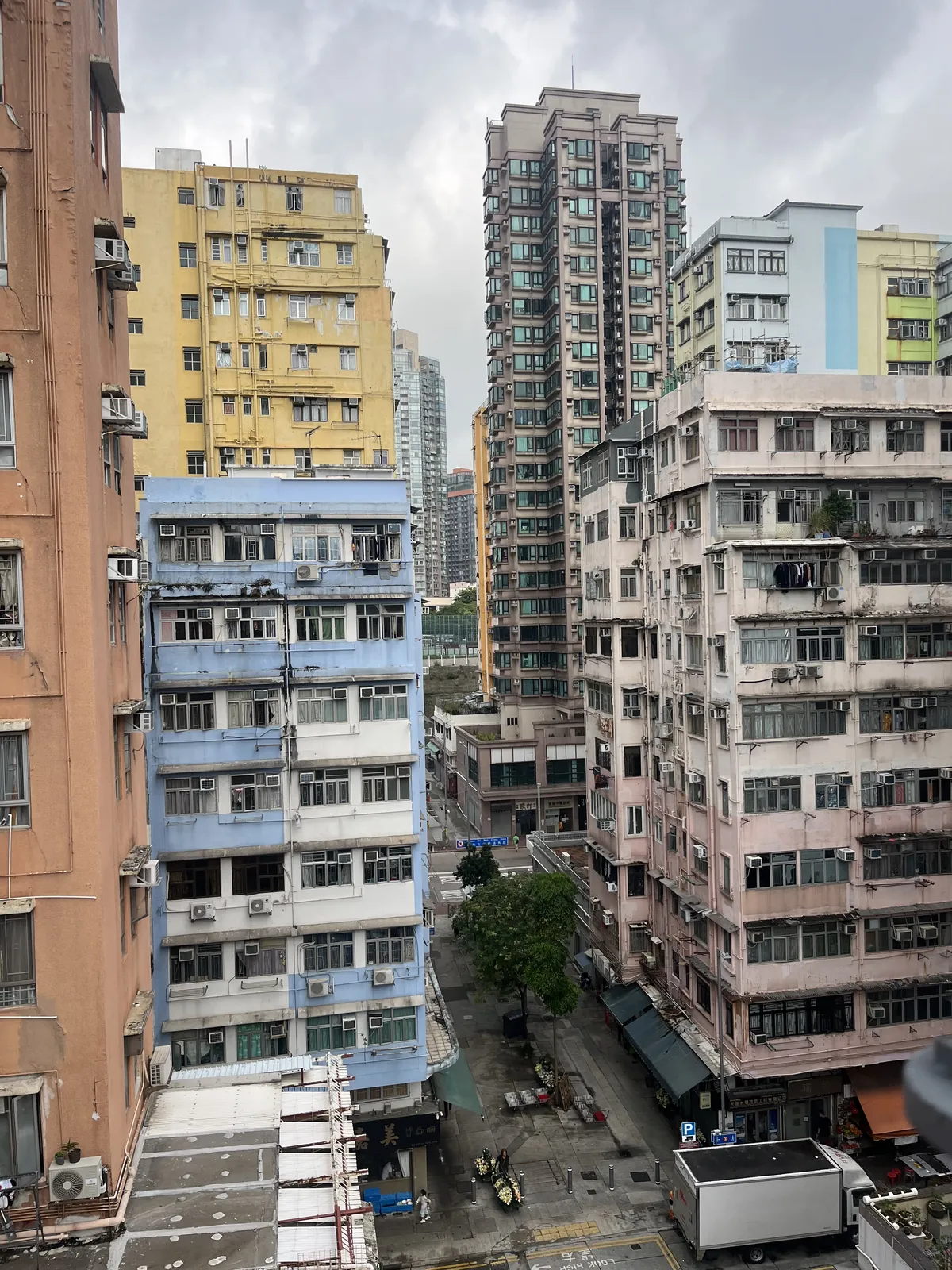
The neighbourhood’s funeral parlours belong to that streetscape, with their attendant shops selling flowers, urns and coffins among other related services. These sights were new to me, and I caught myself lingering on details I would walk past without a glance at home. Here they are simply part of the ordinary life of the district, set among the restaurants and the other trades.
One traditional medicine shop caught my eye in particular. Its owner is also a kung-fu master, whose trophies stand on display next to what I can only describe as “lizard wine” and ginseng roots (人蔘) floating in jars of thick liquid. This somewhat surreal scene is a reminder that the city is not only a modern metropolis, but also a place where old traditions, folk customs and practices continue to thrive.
Even the shopping centres have their oddities. In Whampoa, one of them takes the form of a cruise ship made of concrete, apparently moored among the buildings. After so many sights of endless towers, stumbling upon an ocean liner at anchor in the middle of the city felt oddly fitting.
The very serious problem of having only one stomach
Food is, without question, the best part of the trip so far. Hong Kong is a food heaven, Hung Hom and Whampoa are filled with places to eat, and I keep running out of appetite long before I run out of temptations.
Dim sum, or how to touch the heart
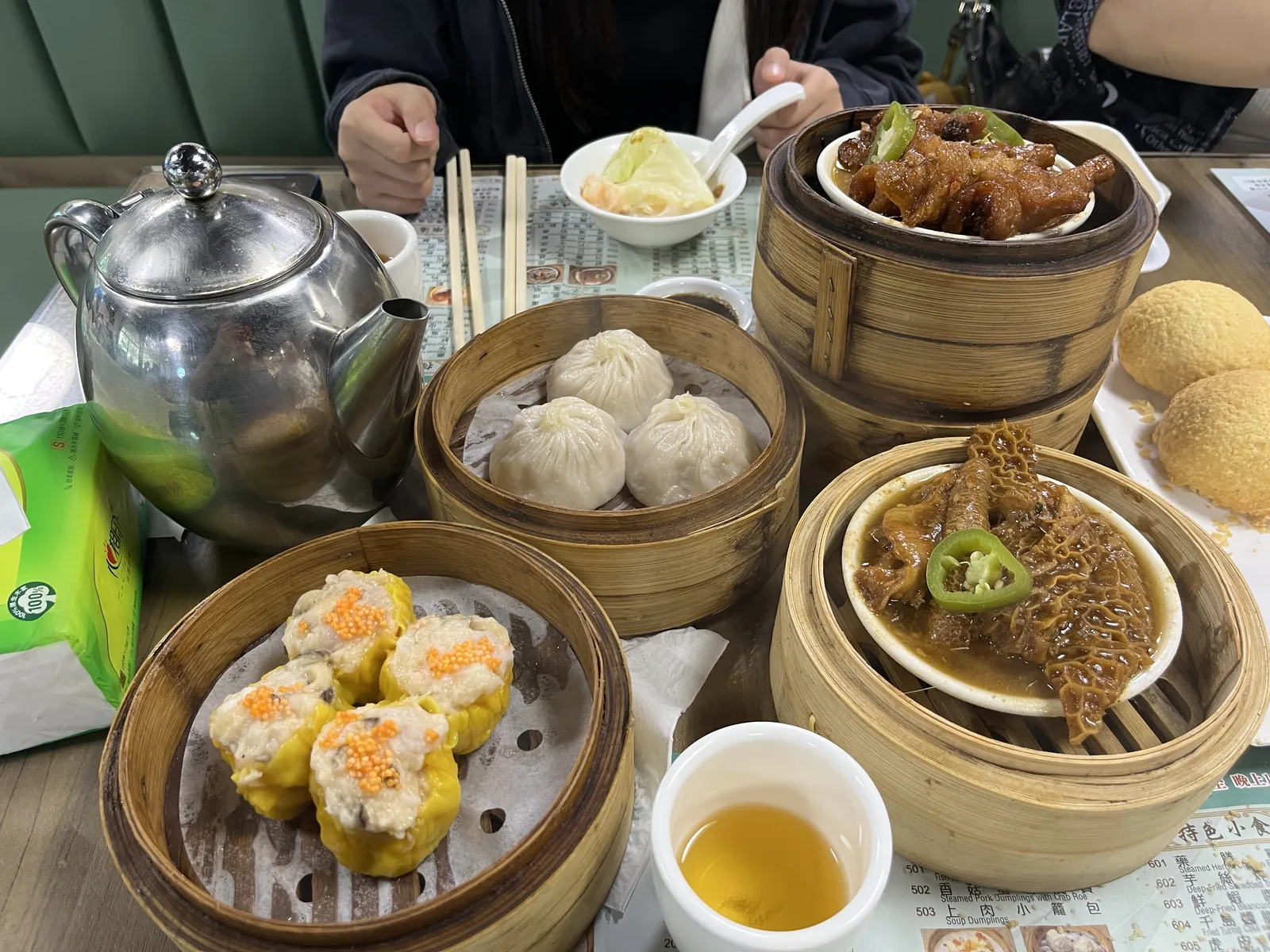
Dim sum (點心, dim sam in Cantonese) is a culinary tradition of southern China, born in Guangdong province and deeply rooted in the food culture of Hong Kong. Its name is commonly read as “touch the heart”. Where a Western restaurant would serve each guest one main course, a dim sum table receives a procession of small dishes meant for sharing, steamed, fried or baked, and built on pork, shrimp, vegetables, rice flour and buns of every kind. Many of them arrive in the distinctive round bamboo steamers in which they were cooked, stacked on the table, so that the food is served at its freshest and at the right temperature. The meal goes hand in hand with tea, to the point that the custom has a name of its own, yum cha (飲茶), literally “drink tea”, and traditionally takes place in the morning or around lunchtime. It is also a social ritual, which gathers families and friends around the same table.
My first evening took me to Sun Moon Dim Sum (日月茶點), where I ordered har gow (蝦餃), Snow Mountain Char Siu Bao (雪山叉燒包) and mango pomelo sago (楊枝甘露). The har gow are shrimp dumplings wrapped in a delicate, slightly translucent dough, and the dessert is a chilled, lightly sweet soup in which pieces of mango and pomelo float among sago pearls. The Snow Mountain Char Siu Bao, however, won me over at once. A thin, sweet, crisp crust yields to a soft, fluffy bun, which in turn hides tender pork in a savoury-sweet barbecue sauce. I have praised them to so many friends that they probably expect a photograph every time I go out to eat.
Dim sum is best enjoyed in company. Small dishes travel around the table, and someone always orders the thing I would not easily have dared to choose myself. That is how I have discovered much of the food here. The table fills up, I try to remember what everything is called, and another dish is already on its way.
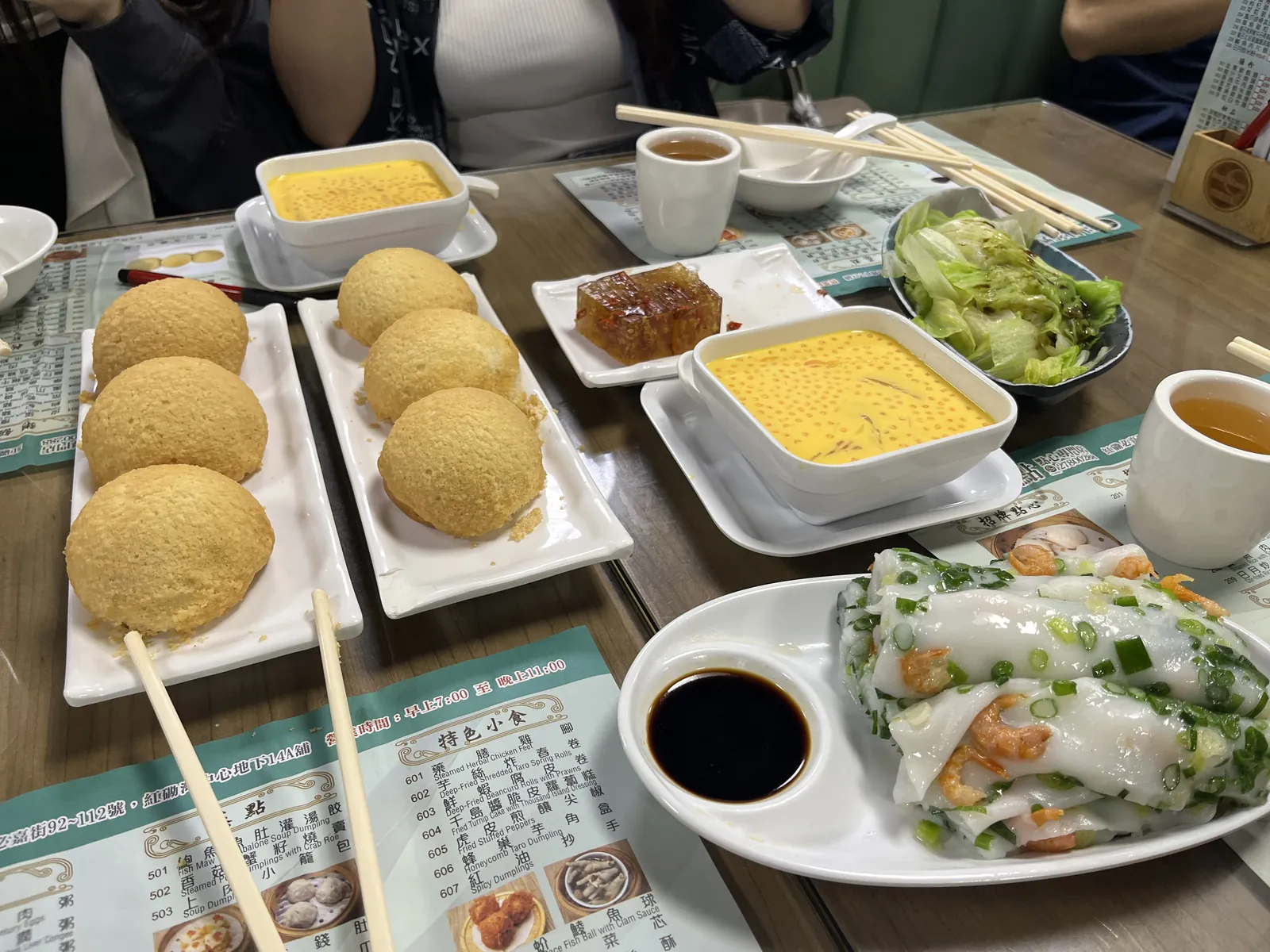
Shared tables introduced me to the rice noodle rolls with scallions and dried shrimp (蔥花蝦米腸), soft and steamed, and to the soup dumplings (小籠包), whose broth is trapped inside as a jelly that melts during steaming. They also pushed me outside my comfort zone, with chicken feet (鳳爪) in a savoury sauce and honeycomb tripe (金錢肚) seasoned with satay, before I retreated happily inside it with steamed cake. The honeycomb tripe left me unconvinced, and the chicken feet were merely fine. I am glad to have tasted them, even if my thoughts drift back to the pork buns afterwards.
Beyond dim sum
Outside the dim sum houses, my great discovery is Cantonese claypot rice (廣式煲仔飯). The rice arrives in its burning-hot pot, which goes on slowly grilling it while you eat. I have already returned a few times to 香姐美食 (Heung Je Mei Sik), an address whose signs advertise several kinds of Chinese street food, claypot rice, Northeastern Chinese crispy pork and savoury pancakes among them. My favourites there are the Chinese sausage rice (臘腸飯), with its slightly sweet cured sausage, and the beef and egg claypot rice (窩蛋牛肉飯).
The Sichuan-style Kung Pao chicken (宮保雞丁), stir-fried with dried chillies and peanuts, left a more vividly burning memory, even though I had asked for a low level of spice. I loved it, and I suffered for it. The strangest entries on my list so far are abalone (鮑魚) and sliced jellyfish (海蜇), both met at a banquet table that I describe further below.
The dumplings I remember best came from Din Tai Fung (鼎泰豐), a Taiwanese chain famous for its soup dumplings, where Karen took me on the evening of the Sunday recounted further below. For dessert, I ordered chocolate dumplings, and the hot melted chocolate inside was a marvel, a small piece of heaven.
Closer to work, the café on the PolyU campus has become a habit. I can walk there straight from my office at the lab for a mango smoothie (芒果沙冰), a coffee or a snack, a convenience I have come to appreciate between two stretches of work.
There have been a few disappointments too, which seems only fair to confess amid so much enthusiasm. The bolo yau (菠蘿油), a brioche-like bun under a sweet crust, concealed a whole slab of butter, which proved too much even for someone who has never flinched at a kouign-amann. The egg tart (蛋撻), a crumbly little pastry filled with custard, left me longing for a good French flan. Later, Macau’s pastéis de nata (葡撻) redeemed the whole family of custard tarts. I fully intend to pursue this investigation, and have already continued it with the steamed egg custard buns (黑金流沙包) at yet another dim sum restaurant. Their black and gold appearance promised a “world-famous” recipe, and the buns were indeed excellent, with a smooth custard filling that was neither too sweet nor too eggy.
The meals have also taught me how generous people can be. At one shared lunch, a guest who had to leave early paid for the whole table on her way out, and I am determined to return the invitation. Between colleagues initiating me into new dishes and strangers inviting me to dinner, eating here has become inseparable from meeting people, and the welcoming spirit that permeates the city has made me feel at home.
A few words of Chinese
My Chinese remains rudimentary. I can say hello and thank you, and I can announce that I have a Chinese name, 欧宁睿. That already gives me an opening line whenever I meet someone. The comedy is that people keep answering in English. I gather my courage, deliver my small sentence, and the conversation promptly becomes a good deal easier than my effort deserved.
In shops, facial expressions and hand gestures have covered my needs so far. A remarkable amount can be said by pointing, smiling and looking suitably puzzled. I am picking up scraps of Mandarin and Cantonese, but I would not yet trust myself to sustain a real conversation in either.
I have also come into contact with French expats through a WhatsApp group that a friend told me about. Between that thread, the people at the lab and chance conversations around the city, a place where I landed knowing very few people has begun to feel familiar. I am deeply grateful for the warm welcome I have received from many amazingly kind people all around.
Working at PolyU
The reason for all this remains my research as a visiting scholar. I have the pleasure and honour of working in the team of Professor Edward C. Chung in PolyU’s Department of Electrical and Electronic Engineering, within the Electric Vehicles and Smart Mobility group and the Multimodal Smart Mobility group. My work on routing and optimization finds a natural home alongside the team’s interests in transportation.
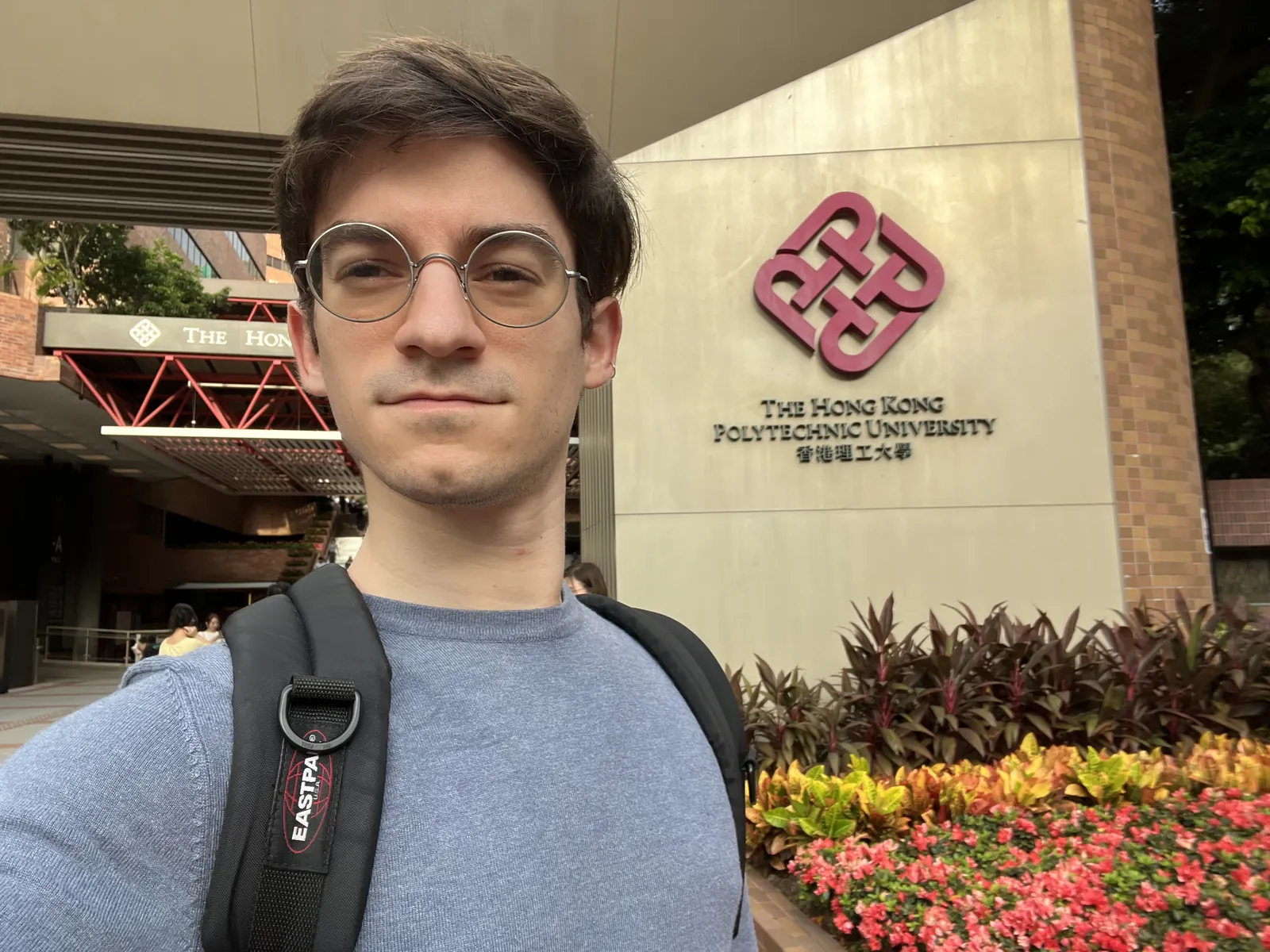
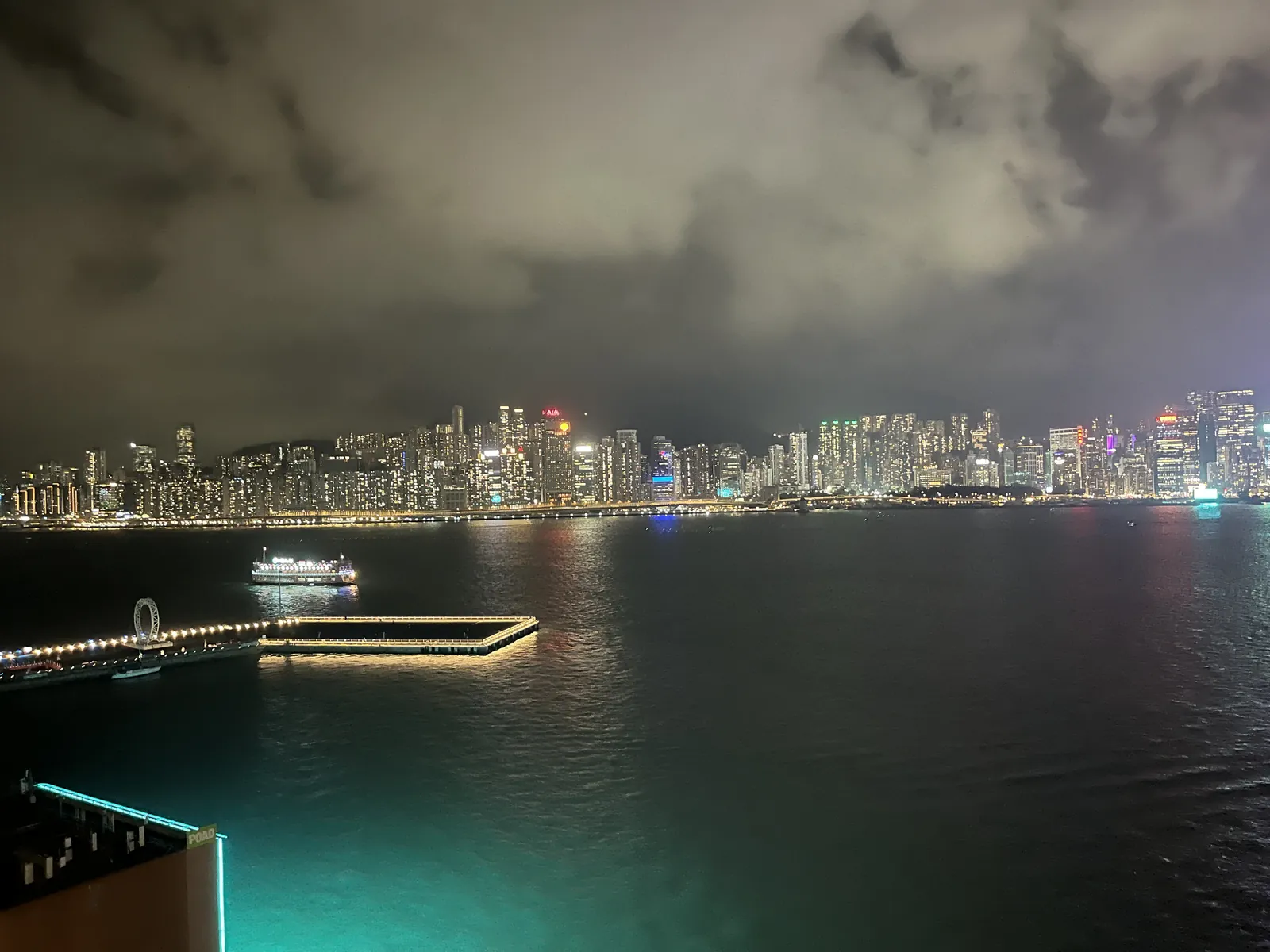
My colleagues at the lab have given me a warm welcome. 程 (Chéng) helped me find my bearings during the first days, and, to thank him for showing me around, I invited him for a cocktail on a rooftop with a view. We enjoyed the view and the cocktails so much that we came back with the team for a second evening a few days later. 易航 (Yìháng) also joined me for the walk up to the Peak. Those moments away from the office have been a pleasant way of getting to know the people I work alongside.
Much of my working time in these first weeks was swallowed by a new version of my thesis manuscript. I sent the 369-page revision to my supervisors, a real milestone after so many months of writing and rewriting. Sending the revision does not mean that the thesis is approved, or that everything is finished. It did free me to start on the defence slides, which bring their own challenge, since material that fills hundreds of pages must now be distilled into something I can explain clearly in a single presentation of a few dozen slides. Other duties, such as the MAMUT-routing project, also occupied my time.
On November 13, I attended the SHUA symposium, Resilient and Smart Urban Mobility for Sustainable Cities, organized by Edward and 程 (Chéng). SHUA stands for the Shanghai-Hong Kong Universities Alliance. The presentations on Intelligent Transportation Systems were of high quality and followed one another at a sustained pace, in 4 groups of 3 talks, each closed by its round of questions. It was an opportunity to listen to researchers from Hong Kong and Shanghai, and to spend a day thinking beyond the immediate task of finishing my own manuscript.
I particularly enjoyed 森 (Sēn)’s presentation on data privacy and meal-delivery platforms. The study considers restrictions inspired by the General Data Protection Regulation (GDPR), under which couriers can refuse to let the platform use their work history to decide which orders and payments to offer them. What stayed with me was the effect on the whole system. In the study, protecting that choice helped retain couriers and increased platform profitability, while customers benefited from shorter delivery times. The associated paper gives the model and results. It was fascinating to discover how a constraint on the information available to an optimization system could change people’s behaviour and improve its performance, contrary to what one might expect.
I also enjoyed 敏 (Mǐn)’s presentation on the spatial organization of traffic risk before a crash, and a separate talk on low-altitude drone logistics, covering infrastructure planning and service network design. The drone discussion sat particularly close to my interests in routing. Lifting the problem from the roads into the air opens another set of questions about how to organize a transport service, and I was glad to let my mind wander over them alongside my own research.
There were also 2 coffee breaks and 2 lavish meals. The second, the gala dinner, was remarkable, with a succession of 9 dishes running from fish and roast chicken to all kinds of seafood, abalone and sliced jellyfish among them. The dishes arrive on a rotating tray at the centre of the table, which turns so that everyone can help themselves. As always here, no bottle of water stands on the table, only an array of teapots. Even an academic event led me back to the same delicious torment, as I could not possibly eat everything.
Across the harbour and up to the Peak
For the outing with 易航 (Yìháng), we reached Hong Kong Island aboard the Star Ferry. The trip is short and very cheap, a pleasant alternative to the MTR that shows the skyline from a different angle for as long as the crossing lasts.
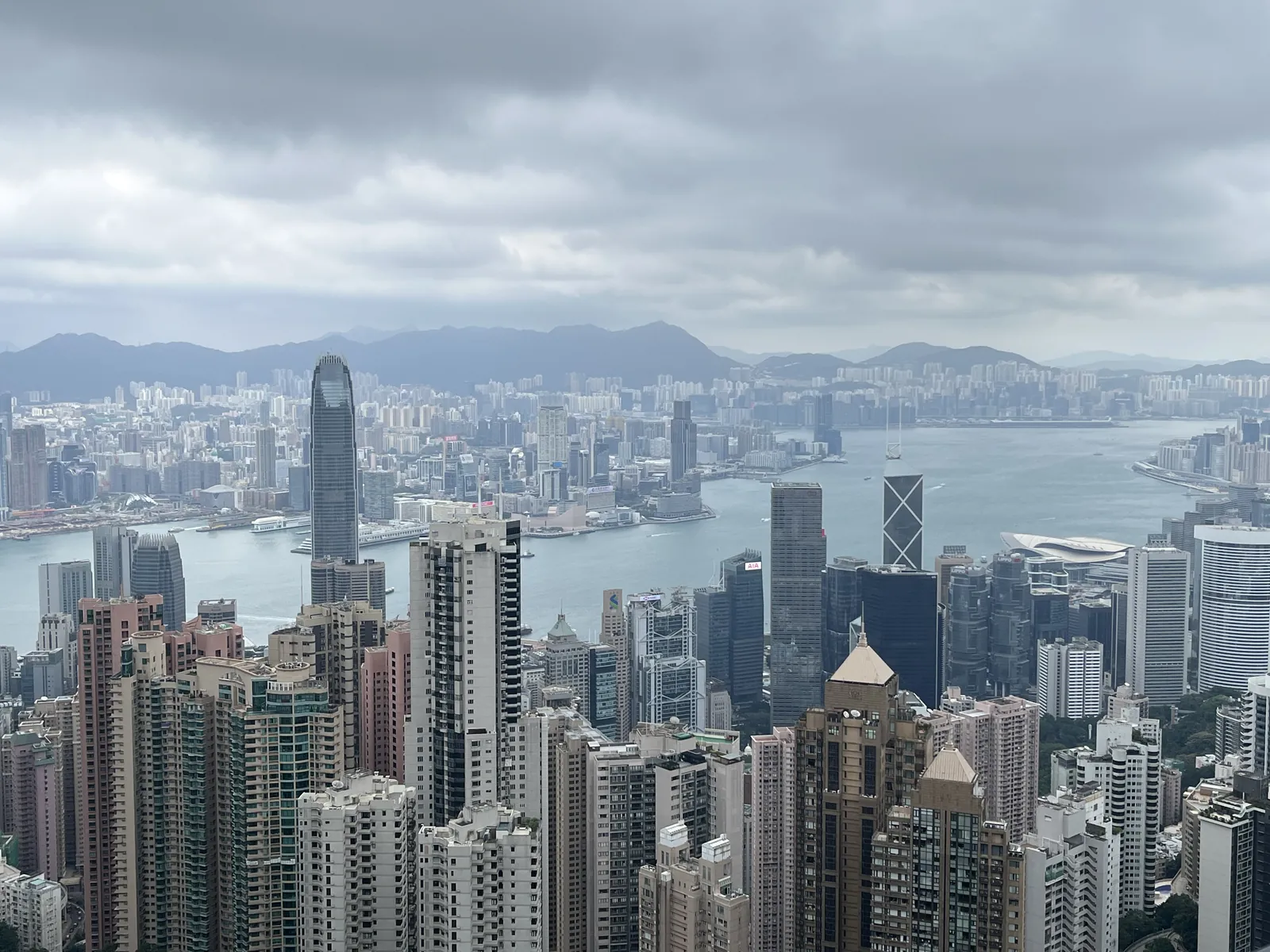
The walk up to the Peak finally gave me the measure of the city. From above, the buildings form a forest of skyscrapers crowding down to the water, with Kowloon spread along the far shore and mountains closing the horizon under a heavy grey sky. I had spent days marvelling at individual towers. Seeing them massed together by the hundreds was another thing altogether.
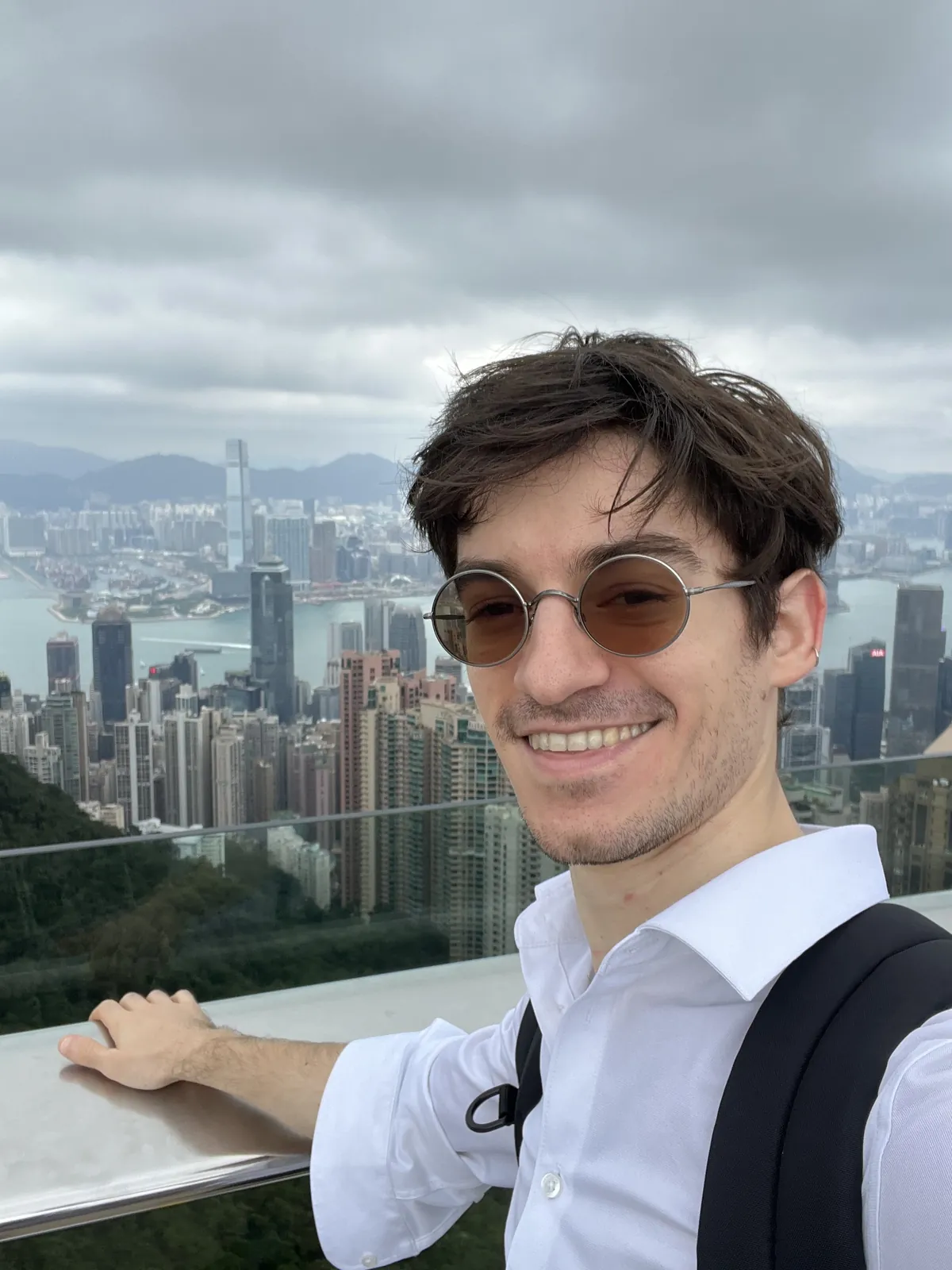
I was amused to find a giant shopping centre waiting at the summit. After walking up a mountain, you may sit down for a coffee and pay for the view. There is also a funicular, which inevitably reminded me of Lyon, where the same idea comes with rather different scenery and scale.
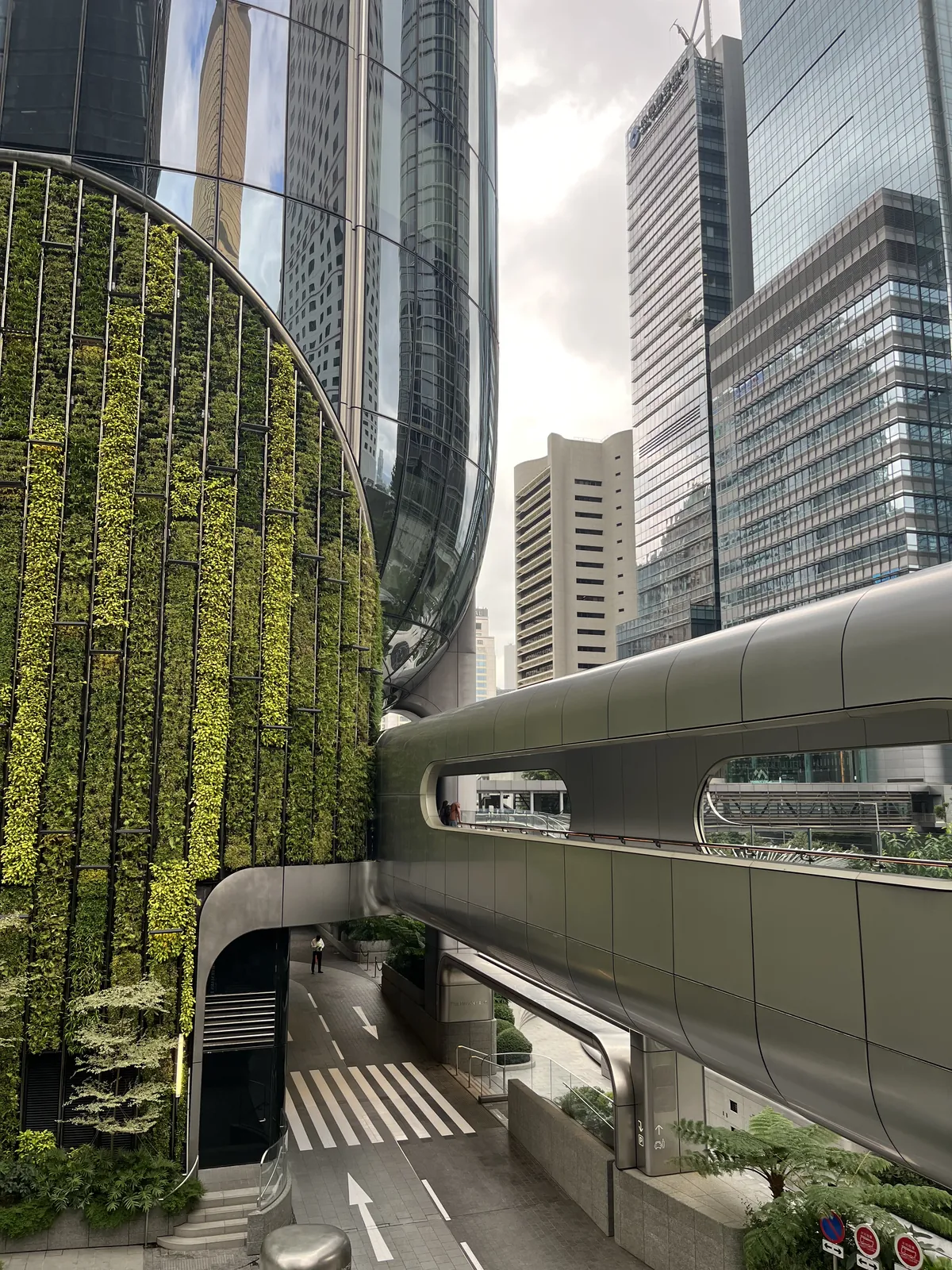
The island’s architecture rewards attention from street level too. Around the Henderson, I photographed the spaceship-like curved glass of the tower, a wall of living greenery and the tubular walkways threading between the buildings. It is a world apart from the streets I am growing used to in Hung Hom, and I enjoy having both within reach.
A day in Macau
I visited Macau with Tina, whom I had met on a bus the week before and who became my guide for the day. The city left me with a striking collision of impressions, with Portuguese colonial heritage, Cantonese residential streets and mega-casinos all packed into a single day.
The casinos look like the very cliché of looming gilded towers, where even the rubbish bins are golden. Passing from that display of wealth to the rest of the city and its inhabitants felt strange, and that contrast is what I remember most vividly. One day is hardly enough to understand a place, but it was enough to send me home with plenty to think about.
The pastéis de nata deserve a mention of their own, for they were a delight. Between those and the food in Hong Kong, this account risks turning into an inventory of everything I have eaten, occasionally interrupted by a view.
The afternoon I had not planned
The Sharp Island outing owed nothing to planning. I had meant to spend the whole weekend working, but that Sunday, laziness had the upper hand, and I worked a little and procrastinated a lot until around 14:00, when hunger finally drove me outside. I took my sports gear along, still hoping to track down a pull-up bar somewhere in the neighbourhood, and came to a halt in front of a dim sum restaurant instead.
The place was full, so I was seated at a table opposite a woman who was eating alone. Her name was Karen. I ventured a hello in Mandarin, she replied in impeccable English, and we fell into conversation over lunch.
When I explained what I had been looking for, she offered to show me an exercise area she knew. Then she suggested that we spend the afternoon hiking together. Neither of us had any other plans, so off we went.
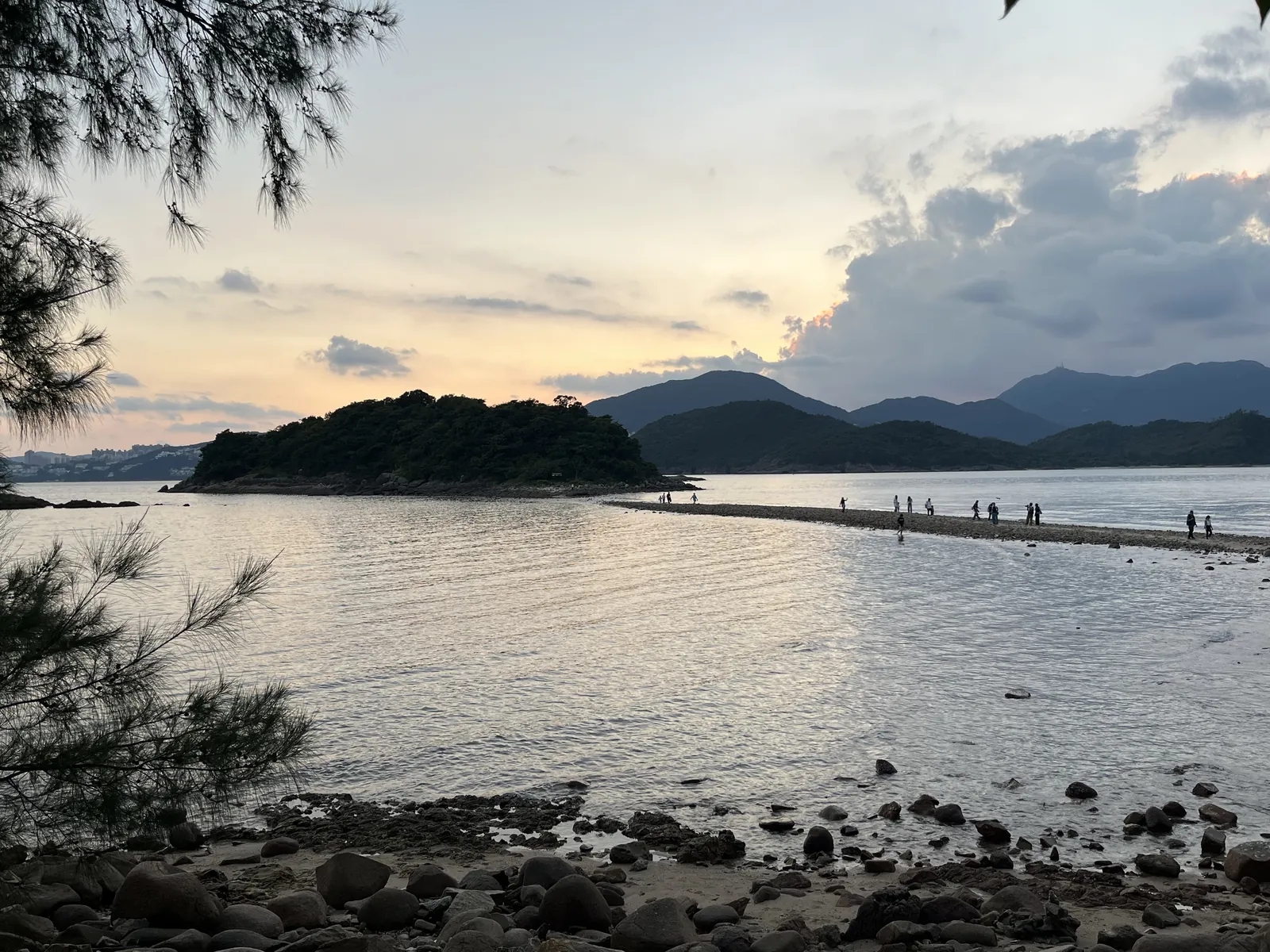
We left Whampoa around 15:00, first by bus and then by boat, bound for Sharp Island. The journey itself felt magical. The sea lay absolutely flat, and the boat seemed to glide over a mirror. Having set out so late, we reached the island as the day was ending, just in time for the sunset. As we approached, a band of sand, which the tide uncovers to link Sharp Island to a smaller neighbour, made the people crossing it look from a distance as if they were walking on water.
The island is decidedly tropical, with its distinctive pineapple rocks and its calm, transparent waters stretching to the horizon in the golden pink light of the sunset. It looked to me like a small paradise, the kind of landscape that invites travel and daydreaming, and I kept thinking how far the afternoon had carried me from my original plan.
Our conversation went far beyond the usual introductions. Karen had worked in China and in the United States, and she shared stories from those chapters of her life. We talked about balancing work and family, and I told her about the hardships of my research over the last few years. She answered with the perspective of someone at another stage of life. I was grateful to speak so openly with someone I had only just met, somewhere between a bus, a boat and a trail.
That evening, Karen invited me to dinner at Din Tai Fung, the dumpling house praised above, before we said goodbye. I have met many kind people here, but that afternoon has stayed with me. A stranger with whom I had merely shared a restaurant table had offered me a journey, a sunset and a conversation I could never have planned.
The laptop came too
Among the meals and outings, I have also been doing what I do wherever I am. I updated my NixOS laptop and my server, worked on this website, and experimented with running more AI tools locally on Linux, on top of the heavy work on the manuscript and the Kayros solver.
One of those experiments used Parley and Whisper for speech-to-text on the laptop. Speaking aloud and obtaining a usable transcript without leaving the machine was encouraging. I also tested local language models for agent tasks through opencode. A smaller model worked, while a larger one first trapped itself in a loop on a NixOS question before tuning improved the result. These are still experiments, with the occasional frustration that the word implies. I like the prospect of having useful tools on my own machine when no connection is available.
Starting to feel at home
After roughly 2 weeks, I am beginning to have my own places and people here. I know which dishes I will order again, I have colleagues to talk to at the lab, and Hung Hom is slowly becoming a map I carry in my head. I am still astonished by how much can happen between leaving the office and returning to work the next morning, or between going out for lunch and coming home at night.
The manuscript revision is sent, the next stage of work has begun, and most of the city still lies ahead of me. For now, I am happy to have found a rhythm that leaves room for research, long walks, conversations with people I have just met, and one more plate of Snow Mountain Char Siu Bao.